


Quick Answer
Choose datacenter proxies when volume, availability, and lower unit cost are the priorities—and your target accepts traffic from hosting networks. Choose ISP proxies when you need a stable, ISP-registered identity and reduced target-site friction is worth a higher purchase price.
If you are unsure, test datacenter proxies first and move affected workflows to ISP proxies when blocks, challenges, retries, or failed sessions increase the total cost.
ISP vs. datacenter proxies at a glance
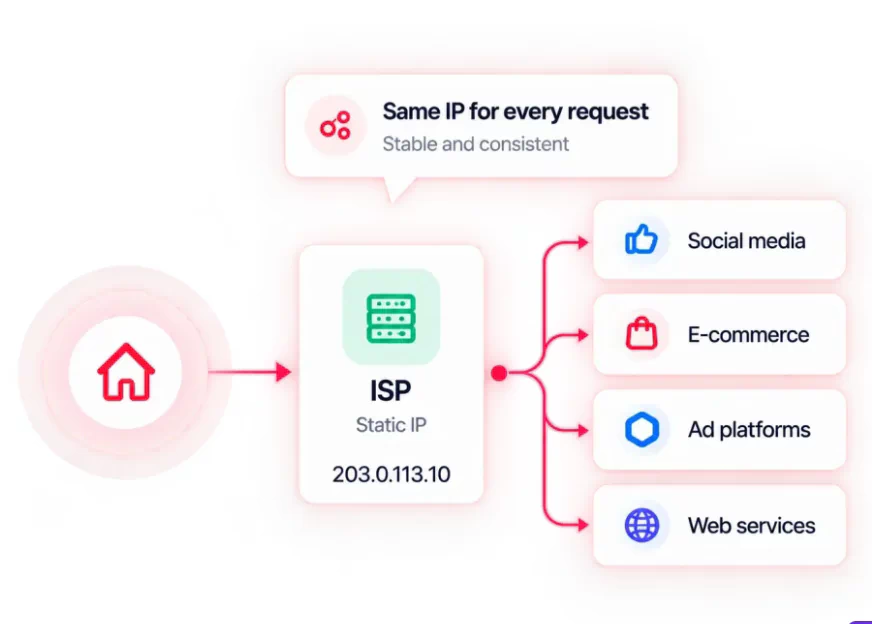
Datacenter proxies use IP addresses associated with cloud or hosting infrastructure. ISP proxies are generally hosted on server infrastructure too, but their addresses are registered to internet service providers. That network classification can affect how a target evaluates the traffic.
| Decision factor | ISP proxies | Datacenter proxies |
|---|---|---|
| IP registration | ISP-registered IP addresses | Hosting- or datacenter-associated IP addresses |
| Typical target perception | May face less friction on sites cautious about hosting networks | More readily classified as infrastructure traffic |
| Session use | Commonly selected for persistent, identity-sensitive sessions | Static or rotating options can support short- or long-lived workflows |
| Scalability | Inventory may be more limited or costly | Commonly suited to high concurrency and broad parallel workloads |
| Cost | Usually priced at a premium | Often has a lower entry or unit cost |
| Best starting point | Sensitive targets and persistent sessions | High-volume work on targets that accept datacenter IP addresses |
These are practical tendencies, not universal performance rules. Neither proxy type guarantees access, anonymity, or freedom from blocks. Results also depend on the target, IP reputation, request pattern, session configuration, account behavior, and the history of each address.
What Should You Consider When Choosing a Proxy?
Beyond speed and price, a few other factors can affect how well a proxy performs. These include IP reputation, connection stability, and the overall cost of completing your tasks.
IP Reputation and Target Compatibility
A proxy’s IP reputation can affect how target websites handle your requests. Some websites are more cautious about traffic from datacenter networks, while others accept it without issues.
Besides network type, websites may also evaluate an IP’s usage history, request frequency, session consistency, and account activity. A poor IP reputation or unusual traffic pattern can lead to more verification checks, restrictions, or blocked requests.
That’s why it’s important to check IP reputation when choosing a proxy. A clean, reliable IP can help reduce potential access issues, although it does not guarantee that a website will accept every request.
FlashIP provides stable proxy IPs with low risk scores, helping users maintain a more reliable connection for their online workflows. You can also check an IP’s reputation to better understand its risk level before using it.
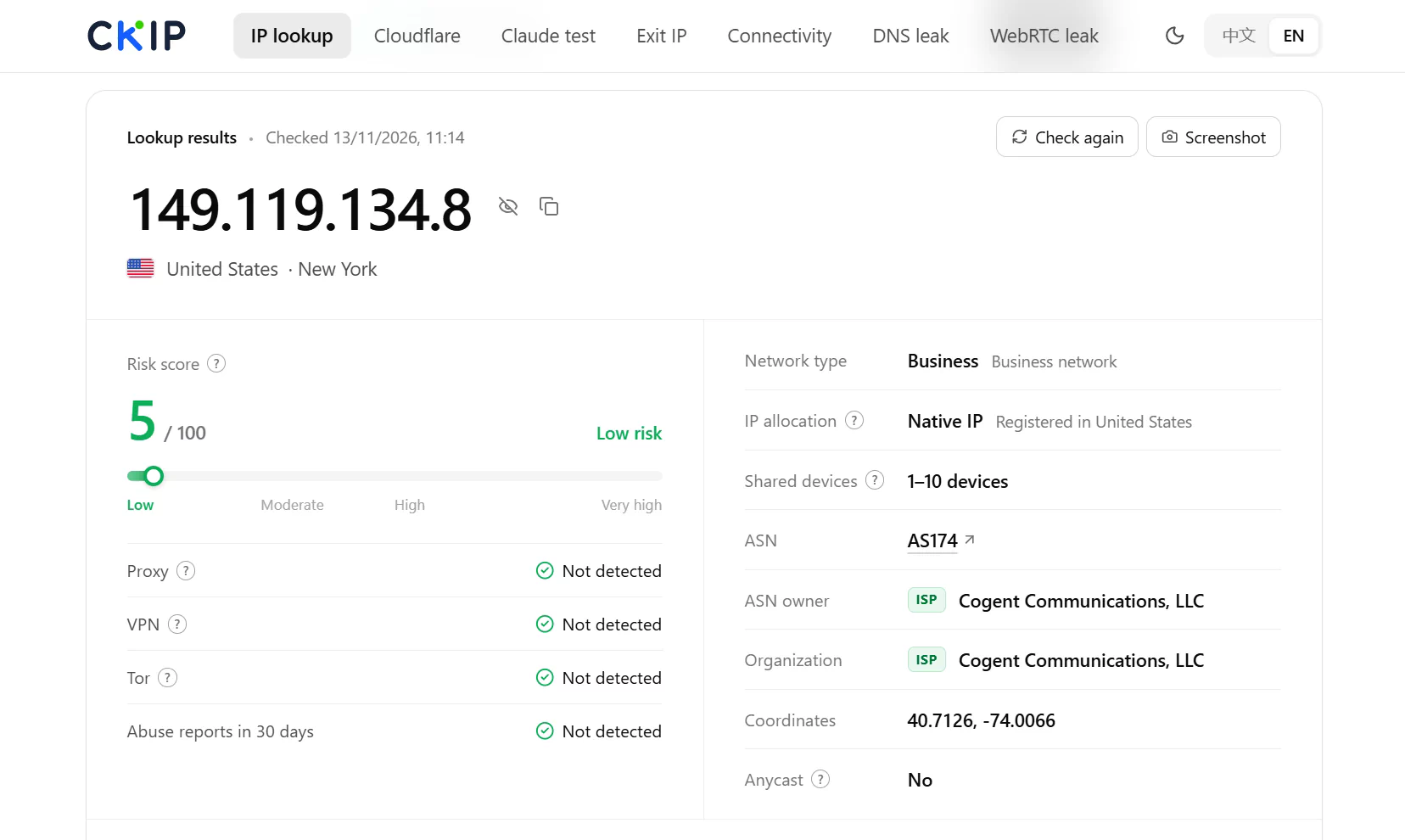
An IP reputation check showing the risk score and network information of a FlashIP proxy IP.
Connection and Session Performance
Connection speed matters, but it’s not the only thing to consider. A fast proxy may still perform poorly if it frequently disconnects, triggers verification checks, or requires repeated retries.
If your workflow requires a consistent IP, check how long the proxy can keep the same IP address and whether it changes after a connection interruption.Sticky sessions can help you maintain the same IP for a set period, depending on the provider.
For tasks involving multiple requests at once, check whether the proxy can handle higher traffic without slowing down or losing connections.
One more thing to keep in mind: static doesn’t mean dedicated. A static proxy keeps the same IP address, while a dedicated proxy gives you exclusive access to that IP.
Pricing and Cost per Successful Request
The subscription price alone does not show the true cost of a proxy. For example, a cheap datacenter proxy may require frequent retries if requests fail or trigger verification checks. This means you could end up spending more on bandwidth and time to complete the same task. In contrast, an ISP proxy may cost more upfront but save resources if it delivers more consistent results.
When comparing prices, look beyond the subscription fee and consider:
- Proxy and bandwidth costs
- Failed requests and retries
- Connection stability
- IP replacement costs
A useful way to compare the two is to calculate the cost per successful request:
Cost per successful request = Total cost ÷ Number of successful requests
Ultimately, the best option isn’t always the cheapest one. It’s the proxy that helps you complete your tasks reliably without unnecessary extra costs.
Which Proxy Type Is Best for Different Use Cases?
The right proxy depends on what you’re trying to accomplish. Here are some common use cases and which type may work best.
Web Scraping and Market Research
Datacenter proxies are a good starting point for large-scale public data collection because they offer fast connections and support high-volume requests. For websites that are more cautious about hosting networks, ISP proxies may be worth testing.
Ad Verification and Regional Website Testing
When checking ads across different countries, you need to see how they appear to users in each target market. The right proxy can help you check local ad placements, landing pages, and the experience after clicking an ad.
Datacenter proxies can be used for routine ad checks across multiple regions, especially when the target platforms accept hosting-network traffic. If a platform applies stricter checks to datacenter IPs, ISP proxies may be worth testing to see whether they provide more consistent access.
SEO Rank Tracking
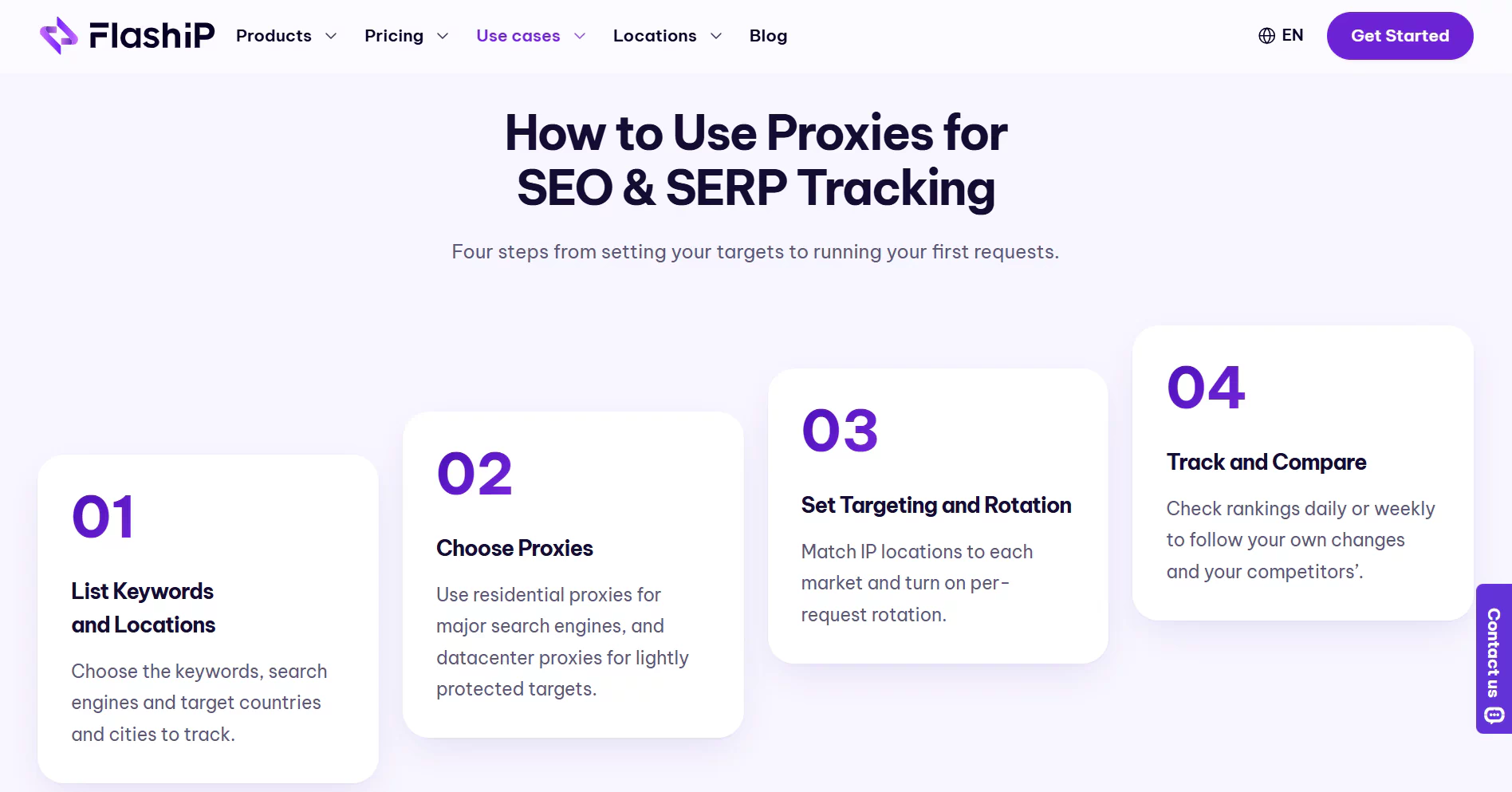
For SEO tracking, location accuracy and consistent search results matter most. A proxy should provide an IP from the target region and maintain a reliable connection between checks.
Both datacenter and ISP proxies can work, depending on how search engines handle their IP addresses. Test the actual search results rather than relying only on the IP’s advertised location.
Social Media Management and Long-Lived Sessions
Managing social media accounts often requires a consistent network environment. Static ISP proxies can provide a stable IP address for recurring account-related workflows.
If you want to learn more about using static ISP proxies for social media account management, check out our guide: Static ISP Proxies for Multi-Account Management.
Final Recommendation
Don’t choose a proxy based on its type alone. Start with a small test and compare how well each option performs. Look at success rates, retries, session stability, location accuracy, and overall costs. Once you know which works better for your target websites, you can scale up with confidence.
Whichever option you choose, evaluate it using target-specific success rates and total operating cost rather than proxy price alone.
Can I use ISP and datacenter proxies together?
Yes. You can use datacenter proxies for high-volume tasks and ISP proxies for websites that require a more consistent network identity. Combining both types allows you to balance performance, reliability, and cost based on different workload requirements.
What is the difference between a proxy and a VPN?
A proxy routes traffic through an intermediary server, while a VPN typically encrypts traffic between your device and the VPN server. Proxies are often used for specific applications and location-based tasks, whereas VPNs are commonly used to protect network traffic across a device or connection.
If you need to compare their features and use cases, read our guide: VPN VS Proxy: Why More and More Enterprises Are Choosing Proxy IPs?
How do I know if my proxy IP is working correctly?
You can check your proxy’s IP address, location, connection speed, and network type using IP lookup tools. You should also test whether your target website displays the expected regional content and whether the connection remains stable during use.
Do datacenter proxies work with Google?
Yes. Datacenter proxies can work with Google for tasks such as search result monitoring and SEO research. However, Google may apply additional checks to requests from certain IP addresses. Results can vary depending on IP reputation, request frequency, and location accuracy.
Can ISP proxies be detected?
Yes. ISP proxies can still be detected by websites. Although their IP addresses are registered with internet service providers, websites may use IP reputation, traffic patterns, and other signals to identify proxy connections. An ISP-registered IP does not guarantee that a connection will go unnoticed.